Dear Mrs. Saunders,
For my last blog, I am going to dedicate this blog to the class of Dystopian Lit. I want to thank you so much for creating this class because out of all of the classes that I have taken at Hinsdale Central, this has not only been my favorite, but one that I will continuously think of for the rest of my life and remember forever. Even though there were many times in the class that I would strongly disagree with what people were saying, this class made me realize that I am not always right, and that there are always so many opinions on every single situation, and it is important to look at them all and analyze them before creating my own opinion. It was the disagreements that made the entire class closer, and that will remind me that it is okay to speak my mind and share my opinion even if it may not be what everyone else is saying.
I believe that this class will continue to be the one that I look back upon, even many years from now, and recall the memories made not only through the coursework, but through the class itself as well. You really helped encourage the class discussions and helped everyone to speak their opinion and develop who we all are. Not many of my teachers will allow us to use the words, "prostitution whore", "ass", and all around shouting, but because you don't filter what we say (unless it's really bad), it makes each and every one of us feel comfortable and feel that we can speak our minds.
Even though I am very sad to be leaving this class, I am happy that I will be able to go on taking classes and have the knowledge and background I received from this class. Thank you so much for being such a fantastic teacher and for the patience you have for putting up with all of our antics.
-Caroline Oakum
Monday, January 14, 2013

Blindness
Despite the fact that Blindness scared me half to death, I have to say that I enjoyed this book more than any other this semester. The writing style was extremely different than any other book I have read before, and it took a while to get used to, but once I did it added to the beauty of the literature.
This book made me completely rethink the way that I looked at the world and how I looked at my actions. Even though I have never experienced anything remotely close to the happenings in this book, it made me think a lot about what I would do in a situation like this and honestly take a look at my morals. The part of the book that really made me second guess my perspective on things was when I realized that if I were the one person who was able to see, I think that more than likely I would not tell anyone of my capabilities, and sadly, I think I think I would do this out of fear for not being able to help everyone, not because I would think that that's what's best for the group.
I think that the other part of this book that is enthralling is that it may be a book written about a nonexistent blindness epidemic, but it is really a writing about the workings of the human mind and how we interact with one another. It amazed me that this book wasn't originally written in English, yet the diction and syntax in the book were incredibly powerful and made the messages even more clear and important in the book.
Overall, I think that this book should be included not as a "choice" book, but as a required course reading. In my opinion, I believe that this book had more of an impact than Life as We Knew It. Although that book also presented a dystopian view of the world, I think that Blindness created a more realistic, important, and introspective view of the world.
This book made me completely rethink the way that I looked at the world and how I looked at my actions. Even though I have never experienced anything remotely close to the happenings in this book, it made me think a lot about what I would do in a situation like this and honestly take a look at my morals. The part of the book that really made me second guess my perspective on things was when I realized that if I were the one person who was able to see, I think that more than likely I would not tell anyone of my capabilities, and sadly, I think I think I would do this out of fear for not being able to help everyone, not because I would think that that's what's best for the group.
I think that the other part of this book that is enthralling is that it may be a book written about a nonexistent blindness epidemic, but it is really a writing about the workings of the human mind and how we interact with one another. It amazed me that this book wasn't originally written in English, yet the diction and syntax in the book were incredibly powerful and made the messages even more clear and important in the book.
Overall, I think that this book should be included not as a "choice" book, but as a required course reading. In my opinion, I believe that this book had more of an impact than Life as We Knew It. Although that book also presented a dystopian view of the world, I think that Blindness created a more realistic, important, and introspective view of the world.
Friday, December 14, 2012
IdIOcRaCy
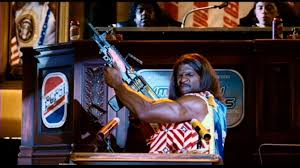
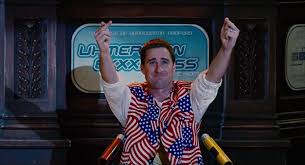
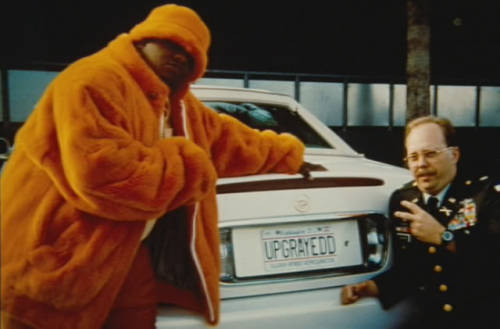
Out of the multiple dystopian societies that we have learned about, I must say that the futuristic society featured in Idiocracy seemed the most frightening. Not only was the world environmentally annhilated, but the entire population were the most unintellegent people ever, who seemed to focus on sex and advertisment in order to decide how they should rule the world.
In all honesty, I think that I would rather live in the society presented in Handmaid's Tale than the future of America as presented in the film. I don't think that I would be able to live in a world where the people who run the hospitals are barely mentally capable to press a button that diagnoses the patient's illness. The fact that the population had resorted to a language mixed of the languages "hillbilly, valleygirl, inner-city slang and various grunts". Not only is this vile civilaztion out right stupid, but they seem to have forgotten what emotions and feelings are as well. In the relationships shown, there is no love, no thoughtfulness, no aspects of the emotional-mental capacity that we as humans cherish. You know that the world has truly hitten rock bottom when you walk into Costco, and not only is it the size of Chicago, but the greeter at the front addresses everyone as they walk in with "Welcome to Costco, I love you. Welcome to Costco, I love you. Welcome to Costco, I love you. Welcome to Costco, I love you."
However frightening this movie was for me, it did lighten the mood of the rest of the films and books we watched throughout the course.


upgrayedd
In all honesty, I think that I would rather live in the society presented in Handmaid's Tale than the future of America as presented in the film. I don't think that I would be able to live in a world where the people who run the hospitals are barely mentally capable to press a button that diagnoses the patient's illness. The fact that the population had resorted to a language mixed of the languages "hillbilly, valleygirl, inner-city slang and various grunts". Not only is this vile civilaztion out right stupid, but they seem to have forgotten what emotions and feelings are as well. In the relationships shown, there is no love, no thoughtfulness, no aspects of the emotional-mental capacity that we as humans cherish. You know that the world has truly hitten rock bottom when you walk into Costco, and not only is it the size of Chicago, but the greeter at the front addresses everyone as they walk in with "Welcome to Costco, I love you. Welcome to Costco, I love you. Welcome to Costco, I love you. Welcome to Costco, I love you."
However frightening this movie was for me, it did lighten the mood of the rest of the films and books we watched throughout the course.
upgrayedd
Friday, December 7, 2012
Language in Handmaid's Tale
Throughout the book, the use of language is often pondered, changed to give a new meaning, or adapted from alternate sources in order to further the author's point. Even the most simple of words that are not thought of by many people when spoken in our society today have very complex and deep connotations to the characters.
One way in which the author changes the language is using Offred's thoughts to create a dichotomy to the meanings of different words. For example, we talked briefly in class about Offred's thoughts on the words "lie" and "lay", and later Offred musing that "lay is always passive". It was brought to attention that "lay" is the stem word of the saying "getting laid", which is most likely not coincidental considering that one of the major issues in this book is sex. Before reading this book, I never thought about the differences between those two words, and never really considered their connotations. After reading the sentence in which she mentions this, I thought about it for a while and realized that it was through her musings such as these that even more meanings are brought to this book.
Take "lie" and "lay", for example. Each of these words has meanings and sayings that can either correlate directly with one another, or have completely different connotations. One way that I looked at it was the fact that "lie" can be used to express the act of laying down, but it can also be used to used to explain when someone is not telling the truth. In this book, I feel that lying is a major role for many of the characters. Moira, for example, lied about feeling ill so she could escape the life of beinga handmaid. The commander often lies, or doesn't tell the entire truth, while spending time with Offred outside of the "ceremonies". One could argue that the entire society is based off of lies and "untruths" that created the handmaid process ro begin with.
"Lay" has an even stronger significance in this book. Offred muses that lay is always passive, which if one should take the example "getting laid" and refer it to the book, then Offred is really implying that in the society they are now a part of, there is no more choice to have sex, but is rather a duty that one is expected to carry out in order to procreate and maintain society. It is in this way that she expresses her displeasure with the entire handmaid process, and the "duties" that come with. Because of the fact that she says "lay is always passive", it led me to think about if "lay", including our society today, is passive. Can it be that still today the choice to "get laid" is a passive decision?
One way in which the author changes the language is using Offred's thoughts to create a dichotomy to the meanings of different words. For example, we talked briefly in class about Offred's thoughts on the words "lie" and "lay", and later Offred musing that "lay is always passive". It was brought to attention that "lay" is the stem word of the saying "getting laid", which is most likely not coincidental considering that one of the major issues in this book is sex. Before reading this book, I never thought about the differences between those two words, and never really considered their connotations. After reading the sentence in which she mentions this, I thought about it for a while and realized that it was through her musings such as these that even more meanings are brought to this book.
Take "lie" and "lay", for example. Each of these words has meanings and sayings that can either correlate directly with one another, or have completely different connotations. One way that I looked at it was the fact that "lie" can be used to express the act of laying down, but it can also be used to used to explain when someone is not telling the truth. In this book, I feel that lying is a major role for many of the characters. Moira, for example, lied about feeling ill so she could escape the life of beinga handmaid. The commander often lies, or doesn't tell the entire truth, while spending time with Offred outside of the "ceremonies". One could argue that the entire society is based off of lies and "untruths" that created the handmaid process ro begin with.
"Lay" has an even stronger significance in this book. Offred muses that lay is always passive, which if one should take the example "getting laid" and refer it to the book, then Offred is really implying that in the society they are now a part of, there is no more choice to have sex, but is rather a duty that one is expected to carry out in order to procreate and maintain society. It is in this way that she expresses her displeasure with the entire handmaid process, and the "duties" that come with. Because of the fact that she says "lay is always passive", it led me to think about if "lay", including our society today, is passive. Can it be that still today the choice to "get laid" is a passive decision?
Monday, November 26, 2012
first connection to handmaid's tale
link
Although the events occurring in the book are not dubbed as prostitution, the events in the book and the basis of the sex slave trade have many of the same foundations. In both, the women have little to no say of what happens to their bodies and men have the ultimate control.
In the book, the handmaids are used as vessels to carry children for other families and are not given the option to leave their "compound" so to speak, unless authorized to do so in order to go to the hospital or carry out their duties as a child bearer. In the sex slave trade, the women are transported to and from their sellers and buyers to "preform their duties". The article discusses this issue and how prevalent it still is in today's society, and how it often goes overlooked. The difference between these two things are that typically, to most, the sex slave trade is extremely frowned upon, and is illegal. However, in the book, the handmaids are an accepted part of life that all sorts of people use in order to live a "normal life", and are looked upon gloriously.
In the class discussion the other day, the question was asked of who had it the worst in the situation between The Captain, Serena Joy, and Offred. At first, I answered that Serena Joy for sure had it the worst, and that she had most of my sympathy. While I still stand by my first statement, while reexamining this situation, it occurred to me that Offred is put into a horrible situation, and is treated much like a sex slave. The situations are slightly different, however she has no say in what she has done to her and is living in horrible conditions. While she can think for herself she cannot express her beliefs and cannot carry them through without suffering horrible consequences (which through implication, I think is death). She is treated like an item, not a human being, and her wants are completely ignored by all who have control of her life.
Although the events occurring in the book are not dubbed as prostitution, the events in the book and the basis of the sex slave trade have many of the same foundations. In both, the women have little to no say of what happens to their bodies and men have the ultimate control.
In the book, the handmaids are used as vessels to carry children for other families and are not given the option to leave their "compound" so to speak, unless authorized to do so in order to go to the hospital or carry out their duties as a child bearer. In the sex slave trade, the women are transported to and from their sellers and buyers to "preform their duties". The article discusses this issue and how prevalent it still is in today's society, and how it often goes overlooked. The difference between these two things are that typically, to most, the sex slave trade is extremely frowned upon, and is illegal. However, in the book, the handmaids are an accepted part of life that all sorts of people use in order to live a "normal life", and are looked upon gloriously.
In the class discussion the other day, the question was asked of who had it the worst in the situation between The Captain, Serena Joy, and Offred. At first, I answered that Serena Joy for sure had it the worst, and that she had most of my sympathy. While I still stand by my first statement, while reexamining this situation, it occurred to me that Offred is put into a horrible situation, and is treated much like a sex slave. The situations are slightly different, however she has no say in what she has done to her and is living in horrible conditions. While she can think for herself she cannot express her beliefs and cannot carry them through without suffering horrible consequences (which through implication, I think is death). She is treated like an item, not a human being, and her wants are completely ignored by all who have control of her life.
Friday, November 16, 2012
Children of Men
While the movie, Children of Men was quite honestly extremely disgusting (showing a woman give birth in the back of a shack, which was inexplicably repulsive) at times, it did portray an interesting take on what will be the fall, or shall I say the alpacalypse, of the modern world. The movie never explicitly names what caused the entire population to die off and start a modern warfare between literally every single person on the planet earth and infertility.
In my opinion, the most shocking, and sadly fairly realistic, event that occurred in this movie was the concentration camps for the "fugees", aka illegal immigrants whose homes were destroyed. In the world we live in today, we tend to be afraid of what we don't know, which in the case of this movie, were the people from other towns. Instead of allowing the immigrants to move into England and attempt to live a normal life, they hunted them down and made it nearly impossible to enter the country unless taken into one of their camps. Instead of putting the prisoners into a jail that we today put criminals in, the government had decided to put the illegal immigrants into camps where they were usually either killed, tortured, or both. One of the reasons that I am assuming they did this is because in a prison system like we have in America, the prisoners are clothed and fed because majority of the time the imprisoned have a release date to be sent back into society. In the movie, however, the government killed or was the cause of the prisoners' deaths because then there would be no risk of them entering the country.
It seemed to me, throughout watching the film, that the government didn't even want to help the current citizens of England alive. On multiple occasions in the film there would be propaganda of some sort for a pill that would kill whoever had taken that pill in their sleep. This form of assisted suicide was endorsed by the government so they wouldn't have to assist anyone in their country besides themselves. While I was watching the film, I wondered if the cause for the infertility and the warfare and destruction of all of the nations was caused by either multiple governments or the government of England itself. To me it seemed strange that if the disaster had been environmental or natural, there would only be one country left standing on the entire planet. Also, the midwife in the film said that the infertility started out through women having miscarriages all of the time, and eventually resulted to infertility. It seems strange that there would be this type of situation that would just occur on its own, and not planned by anyone.
All in all, this movie definitely made me think, and I would recommend it to anyone who not only enjoys literature and films that are dystopian, but anyone who enjoys films in general.
In my opinion, the most shocking, and sadly fairly realistic, event that occurred in this movie was the concentration camps for the "fugees", aka illegal immigrants whose homes were destroyed. In the world we live in today, we tend to be afraid of what we don't know, which in the case of this movie, were the people from other towns. Instead of allowing the immigrants to move into England and attempt to live a normal life, they hunted them down and made it nearly impossible to enter the country unless taken into one of their camps. Instead of putting the prisoners into a jail that we today put criminals in, the government had decided to put the illegal immigrants into camps where they were usually either killed, tortured, or both. One of the reasons that I am assuming they did this is because in a prison system like we have in America, the prisoners are clothed and fed because majority of the time the imprisoned have a release date to be sent back into society. In the movie, however, the government killed or was the cause of the prisoners' deaths because then there would be no risk of them entering the country.
It seemed to me, throughout watching the film, that the government didn't even want to help the current citizens of England alive. On multiple occasions in the film there would be propaganda of some sort for a pill that would kill whoever had taken that pill in their sleep. This form of assisted suicide was endorsed by the government so they wouldn't have to assist anyone in their country besides themselves. While I was watching the film, I wondered if the cause for the infertility and the warfare and destruction of all of the nations was caused by either multiple governments or the government of England itself. To me it seemed strange that if the disaster had been environmental or natural, there would only be one country left standing on the entire planet. Also, the midwife in the film said that the infertility started out through women having miscarriages all of the time, and eventually resulted to infertility. It seems strange that there would be this type of situation that would just occur on its own, and not planned by anyone.
All in all, this movie definitely made me think, and I would recommend it to anyone who not only enjoys literature and films that are dystopian, but anyone who enjoys films in general.
Friday, November 9, 2012
Life as we knew it
page 297
"My family has it," I said. "Don't you have any kind of medicine? There must be something." Linda shook her head. "It's the flu, hon," she said. "It just runs its course. Only thing is no one has the strength left to fight it off."
"It's a bad strain," Maggie said. "Like in 1918. The kind that would kill you anyway."
"But my family," I said. "What should I do for them?"
"Make them comfortable," Maggie said. "And don't bring them here when they die. We're not taking any more bodies."
...
"Honey, listen to us," Maggie said. "It doesn't matter... But whatever's going to happen is going to happen. And it'll happen fast."
first link.
link.
In the Democratic Republic of Congo, there has recently been an Ebola outbreak. Out of the 52 reported cases, 35 cases have been scientifically confirmed. The death rates are rising at an exponential amount, and although the authorities are doing as much as they can in order to try to control the spread of the disease and stop the amount of deaths, the disease is so contagious that this is near impossible. Not only is it incredibly contagious, but since the conditions of the people living in the town are not as "modernized" as those in the United States, it is even easier for the people of Congo to contract the disease. Also, this disease is able to mutate itself quite quickly, which makes people harder to become immune to the disease as once they develop some form of immunity to one strain, another one may be in effect.
I connected the passage from Life As We Knew It to this passage of this epidemic because the passage discusses the flu that is going through the town that seems to be killing everyone that it infects. In the selected passage, the nurses are telling Miranda converses with the nurses of the condition of her family and asks what should be done in order to help them survive. The nurses tell her that not much can be done in relation to the actual curing of the disease, however she could give them aspirin and alcohol rubs in order to diminish the side effects of the disease, which is exactly what is being done for the Ebola victims.
In both of these instances, the victims are being treated the same way; diminishing the symptoms, removing the victims from the "healthy" people, and making the victims as comfortable as possible.
"My family has it," I said. "Don't you have any kind of medicine? There must be something." Linda shook her head. "It's the flu, hon," she said. "It just runs its course. Only thing is no one has the strength left to fight it off."
"It's a bad strain," Maggie said. "Like in 1918. The kind that would kill you anyway."
"But my family," I said. "What should I do for them?"
"Make them comfortable," Maggie said. "And don't bring them here when they die. We're not taking any more bodies."
...
"Honey, listen to us," Maggie said. "It doesn't matter... But whatever's going to happen is going to happen. And it'll happen fast."
first link.
link.
In the Democratic Republic of Congo, there has recently been an Ebola outbreak. Out of the 52 reported cases, 35 cases have been scientifically confirmed. The death rates are rising at an exponential amount, and although the authorities are doing as much as they can in order to try to control the spread of the disease and stop the amount of deaths, the disease is so contagious that this is near impossible. Not only is it incredibly contagious, but since the conditions of the people living in the town are not as "modernized" as those in the United States, it is even easier for the people of Congo to contract the disease. Also, this disease is able to mutate itself quite quickly, which makes people harder to become immune to the disease as once they develop some form of immunity to one strain, another one may be in effect.
I connected the passage from Life As We Knew It to this passage of this epidemic because the passage discusses the flu that is going through the town that seems to be killing everyone that it infects. In the selected passage, the nurses are telling Miranda converses with the nurses of the condition of her family and asks what should be done in order to help them survive. The nurses tell her that not much can be done in relation to the actual curing of the disease, however she could give them aspirin and alcohol rubs in order to diminish the side effects of the disease, which is exactly what is being done for the Ebola victims.
In both of these instances, the victims are being treated the same way; diminishing the symptoms, removing the victims from the "healthy" people, and making the victims as comfortable as possible.
Subscribe to:
Comments (Atom)